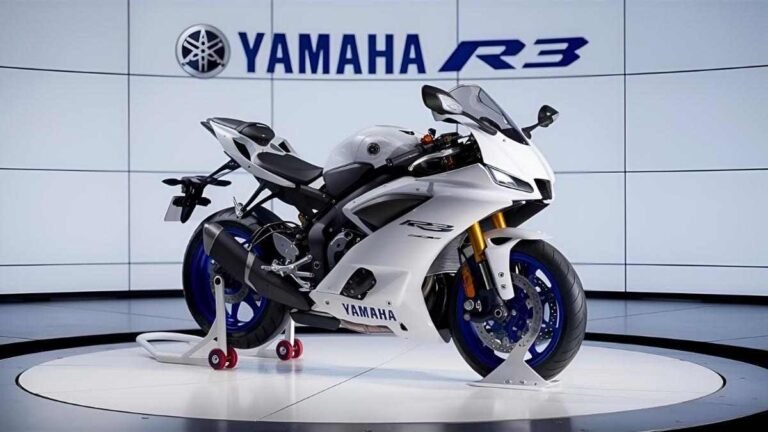
The Yamaha R3 has long been one of the most recognised mid-capacity sport motorcycles available globally, known for its twin-cylinder performance, lightweight handling and Yamaha’s signature ride quality. In India, this model created quite a buzz when it arrived and continues to be discussed — not just for its performance, but for its current availability and future prospects.
Design & Performance: What the Yamaha R3 Offers
The Yamaha R3 is powered by a 321 cc, liquid-cooled, parallel-twin engine that produces around 41.4 bhp and 29.5 Nm of torque. This engine is paired with a 6-speed gearbox, giving the bike a smooth yet punchy performance which suits both city and highway riding.
The chassis and hardware include:
- USD telescopic front forks and a mono-cross rear suspension for balanced handling.
- Dual-channel ABS with disc brakes at both ends for reliable stopping power.
- Lightweight 17-inch alloy wheels with tubeless tyres enhance agility and grip.
- A diamond frame that contributes to the motorcycle’s stability and responsiveness.
The R3’s styling reflects Yamaha’s sportbike heritage, with aggressive lines, a full fairing and a race-inspired stance that appeals to riders looking for performance and aesthetics in equal measure.
Features & Tech on the R3
According to Yamaha Motor India’s official specifications, the R3 is equipped with a digital LCD instrument cluster that displays essential telemetry like speed, fuel level and trip details.
Other noteworthy points include:
- Comfortable seat ergonomics tailored for sporty yet relaxed riding.
- A 14-litre fuel tank for respectable range.
- Standard accessories and optional add-ons like windshield kits and seat cowl.
The R3 doesn’t chase ultra-advanced electronics (like traction control or TFT screens) as found on more expensive sport bikes, but what it offers keeps the focus firmly on pure riding dynamics and sport performance.
Price & Positioning in India
Historically, the Yamaha R3 was positioned as a premium middleweight motorcycle in India. BikeWale’s price listing showed an ex-showroom value of approximately ₹3.39 lakh (average last recorded price in 2025) — making it a considered choice for enthusiasts moving up from smaller bikes.
This pricing placed the R3 near rivals like the Kawasaki Ninja 300 and the TVS Apache RR 310, while Yamaha’s distinct twin-cylinder engine character set it apart in the segment.
Current Availability & Market Context
As of late 2025 to early 2026, the Yamaha R3’s presence in India has become uncertain. While the Yamaha Motor India official model page still lists the bike and allows for enquiries and bookings, multiple market reports and dealer feedback suggest that the current R3 stocks are very limited or out of inventory.
There have been widespread discussions in enthusiast communities and dealer networks about the R3 (and its sibling, the MT-03) possibly being discontinued or temporarily withdrawn from sale in India. Some reports suggest that Yamaha may be preparing to bring an updated version, but no official confirmation has been released by the company on discontinuation or a new-generation R3 launch yet.
Market Dynamics & Future Prospects
The mid-capacity motorcycle segment in India has been evolving rapidly, with competition from bikes like the KTM RC 390, Aprilia RS 457 and others. Despite its strengths, Yamaha’s R3 has faced limited sales traction compared to these rivals, partly due to its pricing and the import-based supply model that made margins and availability variable.
Official data from Yamaha’s own India site still shows the R3 in the model lineup, indicating that the brand maintains presence and support for the bike, even if stocks are low.
For riders interested in the R3 today, it’s advisable to:
- Check Yamaha dealerships directly for booking and availability.
- Consider used R3 options where available, as April 2025 saw reported lower prices due to GST benefits on bikes under 350 cc.
Final Takeaway
The Yamaha R3 remains one of the most iconic middleweight sportbikes associated with Yamaha’s global identity, offering robust twin-cylinder performance and everyday usability. Its future in India — whether as existing stock, an updated model, or a brief market hiatus — is still unfolding, but what’s clear is that its design, engine and ride dynamics remain highly respected by enthusiasts.